1. Understanding Roofing SEO
Roofing SEO — search engine optimization specifically tailored for roofing contractors — is the process of improving your website's visibility in search results when homeowners and property managers search for roofing services in your area. Unlike general SEO, roofing SEO services focus on local intent, emergency service queries, and the seasonal demand cycles that are uniquely characteristic of the roofing industry.
When a homeowner's roof starts leaking after a storm, they don't flip through a phonebook — they reach for their phone and search "emergency roof repair near me" or "roofing contractor [city name]." If your business doesn't appear in the top results, you lose that lead to a competitor. That's the fundamental problem that SEO for roofing companies solves, and it's a problem with enormous financial consequences: a single lost high-value roofing job can represent $5,000–$30,000 in missed revenue.
What distinguishes effective roofing SEO from generic digital marketing is its specificity. Roofing companies don't need traffic from across the country — they need highly qualified leads within a 20–50 mile radius of their base of operations. Every keyword, every piece of content, every backlink should serve that geographic and commercial focus. This hyper-local orientation is what makes roofing contractor SEO a distinct discipline that generalist marketing agencies frequently get wrong.
Google's algorithm evaluates roofing websites across hundreds of signals, but they broadly fall into four categories: relevance (does your content match what the searcher needs?), authority (do trusted sources vouch for you?), technical quality (is your site fast, crawlable, and mobile-friendly?), and experience signals (do visitors engage with your site or bounce immediately?). Mastering all four simultaneously is what separates roofing companies that dominate local search from those that remain invisible on page two and beyond.
💡 E-E-A-T and Roofing SEO
Effective roofing SEO encompasses keyword strategy, on-page optimization, technical website health, professional web design, local citation building, Google Business Profile management, and authoritative link acquisition. Each pillar reinforces the others, creating a compounding effect that drives sustainable lead generation month over month. A weakness in any single pillar creates a ceiling on your overall results — which is why a comprehensive approach always outperforms single-channel tactics.
It's also worth understanding what roofing SEO is not. It isn't a quick fix or a one-time project. Sustainable rankings require ongoing maintenance, fresh content, review acquisition, and consistent link building. Roofing companies that invest in SEO as a long-term channel consistently outperform those that treat it as a one-time expense — and they do so at a dramatically lower cost-per-lead than pay-per-click advertising, which stops delivering the moment you stop paying.
Looking for More Customers?
Get Your Free Roofing SEO Consultation
We'll analyze your current website, keyword rankings, GBP, and competitive landscape — then deliver a prioritized action plan specific to your market. No generic templates. No fluff. Just clear, actionable roofing SEO recommendations.
2. The Local SEO Landscape for Roofers
The local SEO landscape for roofing companies is intensely competitive in most markets. Every city has dozens of roofing contractors competing for the same high-value queries. Understanding the battlefield — who's ranking, why they're ranking, and where the gaps are — is the first step toward winning it.
Google's local search results display three primary result types: the Local Pack (Map Pack) showing three businesses with ratings, reviews, and distance; regular organic blue-link results below the map; and paid Google Ads at the very top. Appearing in the Local Pack alone can drive enormous call volume — studies show the top three Map Pack positions receive 70% of all local search clicks (Moz Local Search Ranking Factors, 2023), making them arguably more valuable than the organic position 1 result beneath them.
Google's local ranking algorithm weighs three core factors when determining Local Pack positions: Proximity (how close is the business to the searcher?), Relevance (how well does the business match the search intent?), and Prominence (how well-known and trusted is the business across the web?). Of these three, proximity is largely outside your control. Relevance and prominence are where local SEO for roofers focuses its efforts.
📊 Local Search Dominance Statistics
Improving your relevance signals means ensuring your Google Business Profile category, website content, and citation descriptions all clearly communicate that you're a roofing contractor serving specific geographic areas. Improving prominence means accumulating more reviews, earning more backlinks, building more citations, and maintaining a more active and complete GBP than your competitors. Both are ongoing processes — which is why local SEO requires consistent effort rather than a one-time setup.
For roofing companies, local SEO for roofers means optimizing across three distinct ecosystems simultaneously: your website (for organic rankings), your Google Business Profile (for Local Pack rankings), and third-party directories like Yelp, Angi, HomeAdvisor, and the BBB (for citation authority and referral traffic). Critically, all three of these rely on having a fast, credible website as their anchor — which is why roofing web design is as much an SEO concern as a branding one.
It's also important to understand the competitive dynamics within your specific market. A roofing company in a major metro like Dallas or Chicago faces a fundamentally different competitive landscape than one serving a mid-size market like Boise or Knoxville. Market size determines how aggressive your SEO investment needs to be, which keywords are realistically attainable, and how long it will take to see meaningful ranking movement. Our roofing SEO strategy begins with a thorough competitive analysis of your specific market before recommending any tactics.
78% of homeowners search Google before hiring a roofing contractor. If you're not on page one, you're invisible to the majority of your market.
Roofing SEO vs. Generic Home Service SEO
The roofing industry has unique demands that set it apart from generic home improvement SEO. Understanding these differences is key to choosing the right strategy — and the right partner.
| Factor | Roofing SEO | Generic Home Service SEO |
|---|---|---|
| Keyword Focus | Storm damage, material types, city+service combos | Broad home improvement terms |
| Seasonal Strategy | Storm season spikes, spring replacement cycles | Year-round flat strategy |
| Content Topics | Insurance claims, shingle comparisons, hail damage | Generic 'how to' content |
| GBP Optimization | Storm event posting, project photos, emergency hours | Basic listing only |
| Link Building | Manufacturer certifications, supplier directories, storm reports | General directories |
| Buyer Psychology | Urgency/anxiety-driven — storm damage, roof leaks | Calm comparison shopping |
| Conversion Rate | 3–8% optimized | 1–3% generic |
Looking for More Customers?
Get Your Free Roofing SEO Consultation
We'll analyze your current website, keyword rankings, GBP, and competitive landscape — then deliver a prioritized action plan specific to your market. No generic templates. No fluff. Just clear, actionable roofing SEO recommendations.
3. Roofing Keyword Research Strategies
Roofing keyword research is the foundation of any successful SEO campaign. The goal is to identify the exact terms your ideal customers use at every stage of the buying journey — then build a content strategy around those terms to capture qualified traffic before your competitors do.
A common mistake roofing companies make is targeting only the highest-volume keywords (e.g., "roofing contractor") while ignoring the long-tail terms that actually drive high-converting traffic. "Metal roof installation cost in [city]" may have 10% of the search volume of "roofing contractor," but it converts at 3x the rate because the searcher is further along in the decision process and knows exactly what they want.
Roofing keywords fall into several intent categories, each requiring a different content approach and landing page type:
- Commercial intent: "roofing contractor [city]", "roof replacement cost", "best roofing companies near me" — these indicate a buyer ready to hire. They need service pages with clear CTAs and trust signals.
- Informational intent: "how long does a roof last", "signs of roof damage", "what is a roof inspection" — great for blog content that builds authority and captures homeowners earlier in the journey.
- Emergency intent: "emergency roof repair", "roof leak fix today", "storm damage roofer" — ultra-high-value, high-urgency queries that require 24/7 availability messaging and immediate CTAs.
- Comparison intent: "metal roof vs asphalt shingles", "GAF vs Owens Corning shingles", "flat roof vs pitched roof" — these capture homeowners actively researching options. Decision-guide content converts well here.
- Local + service modifier: "roof replacement [neighborhood]", "roofer near [landmark]" — hyper-local queries with high commercial intent and typically very low competition.
✅ Pro Tip: Mine Your Competitors' Keywords
Seasonal keyword strategy is another area where roofing SEO diverges significantly from general SEO. Roofing demand follows predictable seasonal patterns in most markets: late spring through early fall tends to be peak season for planned replacements, while late summer through early fall often sees a spike in storm damage queries. A sophisticated roofing SEO keyword strategy accounts for these cycles, publishing seasonal content and updating service page messaging in advance of demand spikes rather than scrambling to react after they arrive.
Geographic keyword variations add another layer of complexity. If you serve a metro area, your keyword strategy needs to account for city-level, suburb-level, and neighborhood-level terms. "Roofing contractor Houston" and "roofer The Woodlands TX" are both valuable, but they require different pages and different content to rank well. Building a comprehensive location page strategy — with unique, genuinely helpful content for each service area — is one of the highest-leverage keyword tactics available to roofing contractors.

| Keyword Type | Example | Avg. Monthly Volume | Best Content Type |
|---|---|---|---|
| Service + City | roofer [city name] | 500–2,000 | Service Page |
| Emergency | emergency roof repair | 200–800 | Service Page + GBP |
| Informational | how to fix roof leak | 1,000–5,000 | Blog Post |
| Cost/Price | roof replacement cost | 800–3,000 | FAQ / Blog |
| Material | metal roof installation | 400–1,500 | Service Page |
| Review | best roofing company near me | 300–1,000 | GBP + Reviews |
| Seasonal | storm damage roofer | 200–600 | Service Page + GBP |
| Hyper-local | roofer [neighborhood] | 50–200 | Location Page |
Roofing contractors that rank in the Google Local Pack for their primary market receive an average of 40+ organic calls per month — at zero cost-per-click.
The Evolution of Roofing SEO
Roofing SEO has transformed dramatically over the past 15 years. Understanding where it's been — and where it's heading — is essential context for any contractor building a long-term digital strategy.
The Yellow Pages Era
Roofers transition from print directories to basic websites. Google My Business launches in 2014. The first wave of "roofing + city" keyword pages appear. SEO was largely about keyword stuffing and mass directory submissions — tactics that worked briefly before Google caught on.
Mobile-First & Review Revolution
Mobile search overtakes desktop globally. Google officially prioritizes mobile-friendly websites. Homeowners begin relying on Google reviews to vet roofing contractors — 5-star ratings become a decisive competitive weapon. Roofing companies that ignore their online reputation start losing jobs to competitors with better review profiles.
Local Pack Dominance
The Google Map Pack captures 70%+ of clicks for local roofing searches. Citation building becomes essential for Local Pack rankings. Storm-chaser roofing companies flood into paid ads, driving up PPC costs to $35–$90 per click. Organic SEO becomes the highest-ROI alternative for established roofing businesses.
E-E-A-T & The Authority Gap
Google's Helpful Content Update penalizes thin, generic roofing content. Genuine expertise — real project photos, certifications, specific material knowledge, authentic reviews — becomes a hard ranking requirement. Generalist agencies producing boilerplate roofing content begin losing ground to specialist strategies.
AI-First & Voice Search Era
Google's AI Overviews reshape roofing SERPs, summarizing content from the most authoritative sources. Voice emergency queries ("find a roofer near me open now") surge on smart home devices. Entity-rich, well-structured content wins citations in AI-generated answers. Roofing companies with deep topical authority gain an outsized advantage over generalist competitors.
Looking for More Customers?
Get Your Free Roofing SEO Consultation
We'll analyze your current website, keyword rankings, GBP, and competitive landscape — then deliver a prioritized action plan specific to your market. No generic templates. No fluff. Just clear, actionable roofing SEO recommendations.
4. On-Page Optimization for Roofers
On-page optimization for roofing websites means structuring every page so both search engines and potential customers can instantly understand what you offer, where you serve, and why you're the best choice. This encompasses title tags, meta descriptions, header hierarchy, image optimization, internal linking, and the substance and quality of your written content.
The title tag remains one of the highest-impact on-page ranking signals — and one of the most consistently underoptimized elements on roofing websites. Most roofing contractors use generic titles like "Home — ABC Roofing" or "Roof Repair Services" with no geographic modifier, no keyword relevance, and no compelling reason for a searcher to click. A properly optimized title tag follows a formula: [Primary Keyword] in [City, State] | [Brand Name] — [Differentiator]. For example: "Roof Replacement in Denver, CO | Colorado's Top-Rated Roofer — Free Estimates."
🔥 Title Tags Drive Click-Through Rate
Meta descriptions don't directly influence rankings, but they heavily influence click-through rates. A compelling meta description for a roofing service page should include the primary keyword naturally, mention a differentiator (licensed & insured, family-owned, 20+ years, 5-star rated), and include a clear call-to-action ("Get your free inspection today"). Keep it under 160 characters to avoid truncation in search results.
Header structure (H1, H2, H3) serves a dual purpose: it signals content organization to search engines and improves readability for users. Each service page should have exactly one H1 containing the primary keyword and city. H2 subheadings should cover each major topic within the page using related keywords naturally. Avoid the mistake of using H2s purely for decoration — each should introduce a meaningful section of content.
Internal linking is a frequently neglected on-page element with outsized impact. Every roofing service page should link to related service pages, location pages, and relevant blog articles. These links pass authority between pages and help Google understand your site's topical structure. For example, your "Roof Replacement" service page should link to your blog post on "Asphalt vs Metal Roofing," your financing page, your service area pages, and your contact page — creating a web of internally connected content that demonstrates comprehensive expertise.
- H1 tag containing primary keyword + location (e.g., "Roof Replacement in Nashville, TN")
- Opening paragraph answering the searcher's primary need within the first 100 words
- H2 subheadings for each major service variant or sub-topic using related keywords
- Geo-specific content mentioning local neighborhoods, landmarks, and weather conditions
- Customer testimonials embedded directly on the page — not just a separate reviews page
- Clear call-to-action in the first screen view and repeated at intervals throughout
- FAQ section addressing common questions about that specific service (with FAQPage schema)
- Compressed images with descriptive, keyword-rich alt text
- Internal links to related service pages, location pages, and relevant blog content
- Trust signals: license number, insurance info, certifications, BBB rating, years in business
It's also worth emphasizing that no amount of on-page optimization can fully compensate for a poorly designed website. If your pages are slow, hard to navigate, or don't instill trust on arrival, Google measures that friction through engagement signals — and ranks you accordingly. This is why professional roofing web design and on-page SEO must be developed together, not treated as separate projects.
Looking for More Customers?
Get Your Free Roofing SEO Consultation
We'll analyze your current website, keyword rankings, GBP, and competitive landscape — then deliver a prioritized action plan specific to your market. No generic templates. No fluff. Just clear, actionable roofing SEO recommendations.
5. Technical SEO for Roofing Websites
Technical SEO for roofing websites ensures that search engines can crawl, index, and understand your content without technical barriers getting in the way. Many roofing websites lose significant rankings to preventable technical issues — site speed problems, duplicate content, broken links, missing redirects, and poor mobile experiences that frustrate both users and search engine crawlers.
Core Web Vitals — Google's set of page experience metrics — have become explicit ranking factors. Largest Contentful Paint (LCP) measures loading speed and should be under 2.5 seconds. Interaction to Next Paint (INP) measures responsiveness and should be under 200 milliseconds. Cumulative Layout Shift (CLS) measures visual stability and should be under 0.1. Most roofing websites fail at least one of these benchmarks due to large uncompressed images, render-blocking scripts, and low-quality hosting.
Core Web Vitals
LCP under 2.5s, INP under 200ms, CLS under 0.1 — Google's page experience signals are confirmed ranking factors that most roofing sites fail.
Mobile-First Indexing
Over 70% of roofing searches happen on mobile. Google indexes your mobile site first — if your mobile experience is broken, your rankings suffer across all devices.
HTTPS Security
SSL certificates are a confirmed ranking signal. Any roofing site without HTTPS loses trust signals and rankings — and receives a browser security warning that kills conversions.
XML Sitemap & Robots.txt
A properly configured sitemap ensures Google discovers all your service and location pages. A misconfigured robots.txt can accidentally block your most important pages from indexing.
Canonical Tags
Roofing websites often create duplicate content issues with paginated results, URL parameters, and filtered search pages. Canonical tags tell Google which version of a page to index.
Page Architecture
A flat, logical URL structure (yourdomain.com/services/roof-replacement/) helps crawlers discover all pages and distributes link equity efficiently throughout your site.
⚠️ Common Mistake: Slow Image Loading
Crawl budget management matters for larger roofing websites — particularly those with extensive location page portfolios or project galleries. If Googlebot visits your site and finds hundreds of thin or duplicate pages, it may not crawl your most important service pages as frequently. Structuring your site so that Google's crawl budget is spent on your highest-value pages requires deliberate architecture decisions that most roofing websites overlook entirely.
Looking for More Customers?
Get Your Free Roofing SEO Consultation
We'll analyze your current website, keyword rankings, GBP, and competitive landscape — then deliver a prioritized action plan specific to your market. No generic templates. No fluff. Just clear, actionable roofing SEO recommendations.
6. Roofing Web Design: Your Digital Foundation
Before any keyword strategy, link campaign, or Google Business Profile optimization can reach its full potential, there's a prerequisite that too many roofing contractors overlook: a website that actually works. Professional roofing web design isn't about aesthetics alone — it's one of the most consequential ranking factors in your entire SEO ecosystem.
Google's algorithm evaluates far more than your keywords and backlinks. It measures how visitors behave on your site: do they stay and explore, or do they hit the back button within seconds? A high bounce rate, low time-on-page, and poor mobile experience all tell Google your website isn't satisfying searchers — and it will rank you lower accordingly, regardless of how well-optimized your written content is.
The roofing industry is particularly susceptible to the credibility gap created by poor web design. Homeowners making decisions about a $10,000–$30,000 roof replacement are instinctively evaluating your company's professionalism at every touchpoint. A dated, slow, or amateurish website signals — consciously or not — that the contractor may cut corners on the job as well. Conversely, a clean, professional, fast roofing company web design immediately establishes credibility before a single word is read.
📊 The Business Cost of a Poor Website
What separates a high-converting roofing company web design from a generic template site built on a drag-and-drop page builder? Several critical elements that directly influence both user behavior and search engine signals simultaneously:

Speed-First Architecture
Every additional second of load time reduces conversions by ~7%. Sites built for roofing contractors prioritize performance: next-gen image formats, minimal scripts, and fast hosting optimized for lead generation.
Mobile-Optimized Layouts
Over 70% of roofing searches happen on a smartphone — often from someone standing in their driveway looking at storm damage. A mobile-first design ensures your phone number, contact form, and trust signals are instantly accessible.
Trust Signal Architecture
Licenses, insurance certificates, manufacturer certifications, BBB badges, and Google review counts need prominent placement. Purpose-built roofing web design puts these above the fold, reducing the visitor's need to seek reassurance elsewhere.
Conversion-Focused Structure
Every page should have a clear hierarchy: headline → credibility → social proof → CTA. Generic design ignores this. A roofer web design built around the homeowner's decision process converts dramatically more visitors into leads.
SEO-Ready Code Foundation
Clean HTML structure, proper heading hierarchy, schema-ready markup, and crawlable internal linking aren't add-ons — they're built into the foundation of a proper roofing contractor web design from day one.
Location Page Scalability
If you serve multiple cities, your site needs a scalable architecture that can support dozens of unique location pages without becoming a maintenance burden or creating duplicate content penalties.
Why Your Current Website May Be Holding Back Your Rankings
We've audited hundreds of roofing company websites, and the pattern is consistent. A roofer invests in local SEO or link building, rankings improve marginally, but leads don't follow. The bottleneck is almost always the website itself. Improved rankings send more traffic — but if the site doesn't convert that traffic into calls and form submissions, the entire SEO investment is wasted. You're paying to fill a leaky bucket.
The most common website problems we find in roofing site audits: homepage hero sections that don't clearly state what the company does and where it serves (within the first 3 seconds of arrival); no visible phone number above the fold on mobile; contact forms buried three clicks deep; project galleries with 20MB uncompressed images; no social proof visible without scrolling; and page structures that make it impossible for Google to understand what each page is about.
🔥 Web Design and SEO Are Inseparable
Many design decisions that appear purely cosmetic have direct SEO consequences. The placement of your H1, the use of descriptive alt text on project photos, the internal linking between your service pages, the depth of your navigation structure — these all influence how Google crawls and evaluates your site. A roofer web design built without this awareness will require costly retrofitting later. The most efficient approach is to build the SEO requirements into the design specifications from the very beginning.
If your roofing website was built on a generic page builder, hasn't been updated in three or more years, or wasn't designed by someone with roofing industry and SEO experience, a strategic rebuild is almost certainly the highest-ROI investment available to your business right now. Explore our roofing web design services to see how we approach this for roofing contractors across the country.
Looking for More Customers?
Get Your Free Roofing SEO Consultation
We'll analyze your current website, keyword rankings, GBP, and competitive landscape — then deliver a prioritized action plan specific to your market. No generic templates. No fluff. Just clear, actionable roofing SEO recommendations.
7. Content Marketing for Roofing SEO
Content marketing for roofing SEO means creating educational, valuable content that attracts homeowners at every stage of the buyer journey — from "how do I know if I need a new roof?" all the way to "which roofing company should I hire?" Each piece of content you create becomes a permanent digital asset that drives organic traffic indefinitely, compounding in value with every passing month.
The roofing industry is rich with content opportunities that most contractors never capitalize on. Homeowners have thousands of questions about roofing — material types, installation timelines, warranty terms, insurance claims processes, maintenance requirements, storm damage assessment. The contractor that answers these questions comprehensively and honestly online becomes the natural choice when that homeowner is ready to hire. This is the core principle behind roofing content strategy: earn trust before the first phone call.
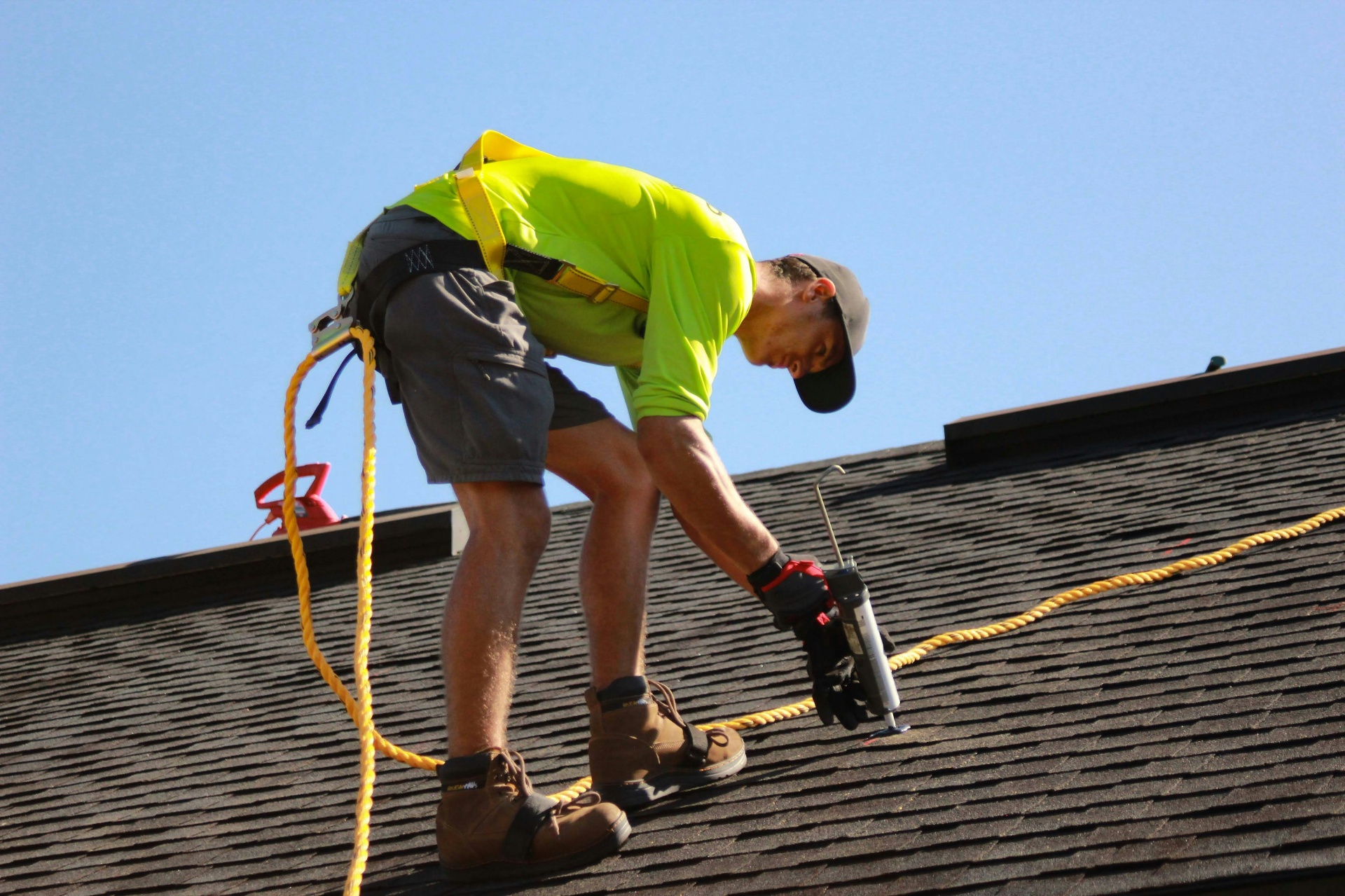
The highest-performing content formats for roofing SEO marketing include:
- Educational blog posts: "10 Signs Your Roof Needs Replacing", "Asphalt vs. Metal Roofing: Which is Better?", "How to File a Homeowner's Insurance Claim for Roof Damage" — these capture early-funnel searchers and build topical authority.
- Location pages: Dedicated pages for each city or neighborhood you serve, with unique local content referencing local weather patterns, common roofing materials in the area, local ordinances, and real project examples from that community.
- Project showcases: Before-and-after galleries with geo-tagged images, detailed project descriptions, materials used, and the homeowner's outcome. These target long-tail local queries and provide rich, indexable content that competitors' template sites can never replicate.
- Cost guides: "How Much Does Roof Replacement Cost in [City]?" — these are among the highest-converting informational queries because they capture homeowners who are actively budgeting and ready to make decisions.
- Manufacturer and material guides: Content about specific shingle brands (GAF, Owens Corning, CertainTeed), roofing materials (architectural shingles, metal roofing, TPO, modified bitumen), and certifications positions you as an expert and captures product-specific searches.
- Storm damage resources: Seasonal guides on hail damage assessment, what to do after a storm, how to spot wind damage, insurance claim timelines — these are particularly valuable in storm-prone markets and can generate surge traffic after severe weather events.
✅ Pro Tip: The Content Cluster Strategy
Consistency matters as much as quality in content marketing. A blog that published 30 articles two years ago and nothing since sends a negative freshness signal to Google. An editorial calendar that commits to 2–4 new pieces of content per month — even shorter, tightly focused posts — consistently outperforms sporadic high-volume publishing. The discipline of regular content production is also one of the most reliable ways to distance yourself from competitors who publish content in bursts and then abandon it.
Looking for More Customers?
Get Your Free Roofing SEO Consultation
We'll analyze your current website, keyword rankings, GBP, and competitive landscape — then deliver a prioritized action plan specific to your market. No generic templates. No fluff. Just clear, actionable roofing SEO recommendations.
8. Local Citations & Directory Listings
Local citations — mentions of your business name, address, and phone number (NAP) on third-party websites — remain a foundational ranking factor for roofing local SEO. Consistent, accurate citations across authoritative directories signal to Google that your business is legitimate, established, and physically operating where you claim to operate. Inconsistent or inaccurate citations do the opposite — they create confusion that suppresses Local Pack rankings.
The citation-building process for roofing companies has three phases: first, claiming and optimizing your listings on the highest-authority directories (Google, Yelp, Facebook, BBB, Angi, HomeAdvisor); second, building citations on industry-specific platforms (Houzz, Porch, Thumbtack, Contractor listings); and third, expanding into locally relevant sources (local Chamber of Commerce, city business directories, regional home improvement blogs, local news sites). Each phase builds on the previous, creating a progressively stronger local relevance signal.
⚠️ NAP Consistency Is Non-Negotiable
Beyond the basic NAP citation, fully fleshed-out directory profiles contribute significantly more value. A complete Yelp profile with 15+ photos, detailed service descriptions, responses to every review, and regular updates sends far stronger relevance signals than a bare-minimum listing with just your name and phone number. The same principle applies to every major directory — completeness is a ranking signal in and of itself.
Looking for More Customers?
Get Your Free Roofing SEO Consultation
We'll analyze your current website, keyword rankings, GBP, and competitive landscape — then deliver a prioritized action plan specific to your market. No generic templates. No fluff. Just clear, actionable roofing SEO recommendations.
9. Google Business Profile for Roofers
Your Google Business Profile (GBP) is the single most important local SEO asset for roofing contractors. A fully optimized GBP can place your business in front of thousands of local searchers every month — completely free. Yet the overwhelming majority of roofing companies leave their GBP incomplete, unmanaged, and underperforming, leaving enormous amounts of free organic traffic on the table.
GBP optimization goes far beyond filling in your address and phone number. The businesses that dominate Local Pack results in competitive roofing markets treat their GBP as an active marketing channel: posting weekly updates, uploading fresh project photos consistently, responding to every review within 24 hours, answering questions in the Q&A section before prospects even have to ask, and maintaining scrupulously accurate business hours — especially during holidays and severe weather events when homeowners need roofing help most urgently.
✅ GBP Optimization Checklist for Roofers
Review generation strategy deserves particular attention because reviews are simultaneously a Local Pack ranking factor and a conversion factor. Volume, recency, rating, and response rate all influence your ranking position. Establish a systematic post-job review request process: a follow-up text message 24–48 hours after job completion with a direct link to your GBP review form consistently generates 3–5x more reviews than asking in person alone.
GBP posts — short updates that appear in your Knowledge Panel and sometimes in search results — are another underutilized feature. Weekly posts showcasing completed projects, seasonal roofing tips, special promotions, or storm preparedness advice keep your profile active and demonstrate ongoing community engagement. Google appears to reward active profiles with slightly higher Local Pack rankings, though the mechanism isn't officially confirmed.
The average cost per lead from Google Ads for roofing keywords is $35–$90. A well-ranked organic result generates the same lead for $0.
Looking for More Customers?
Get Your Free Roofing SEO Consultation
We'll analyze your current website, keyword rankings, GBP, and competitive landscape — then deliver a prioritized action plan specific to your market. No generic templates. No fluff. Just clear, actionable roofing SEO recommendations.
10. Insurance Claim SEO for Roofers
Insurance claim roofing searches are among the highest-converting queries in the entire home services category — and they're 100% unique to roofing. No plumber, HVAC tech, or landscaper faces the same search landscape. When a hailstorm hits a neighborhood, homeowners aren't just looking for a roofer: they're searching for answers to urgent, high-anxiety questions: "Will my insurance cover this?" "How do I file a roof damage claim?" "Which roofer works with insurance?" Capturing this search traffic requires a distinctly different SEO strategy from standard local service pages.
🔥 Why Insurance Claim Searches Convert at 2–3x the Rate
The foundation of insurance claim SEO is a dedicated landing page (or set of pages) targeting "hail damage roof insurance claim [city]" and related variants. These pages need to do several things simultaneously: establish immediate credibility ("We've helped 500+ homeowners navigate insurance claims"), answer the primary anxiety questions (coverage eligibility, process timeline, what documentation is needed), and make the next step frictionless (call now, or schedule a free damage assessment). The combination of keyword relevance, E-E-A-T signals, and conversion optimization is what separates a page that ranks and converts from one that does neither.
Content structure for insurance claim pages should walk homeowners through the process step by step: what a storm damage inspection covers, how to document damage for an insurance adjuster, how to read an insurance estimate, what supplemental claims look like, and how to choose between ACV (Actual Cash Value) and RCV (Replacement Cost Value) coverage. This level of specific, genuinely helpful detail signals real expertise to both Google and the homeowner — and it's the type of content a generalist agency is simply not equipped to produce.
✅ Storm-Chasing SEO: Post-Event vs. Evergreen Content
Your Google Business Profile strategy must also adapt to storm events. Within hours of a significant hail event or wind storm in your service area, your GBP should be updated with: a storm response post linking to your emergency assessment landing page; updated business hours if you're offering extended or emergency service; and photos of your team actively responding to storm calls. This GBP activity signals to Google — and to searching homeowners — that you're actively serving the community during the event, which can meaningfully boost your Local Pack visibility during the exact window when insurance claim searches peak.
Looking for More Customers?
Get Your Free Roofing SEO Consultation
We'll analyze your current website, keyword rankings, GBP, and competitive landscape — then deliver a prioritized action plan specific to your market. No generic templates. No fluff. Just clear, actionable roofing SEO recommendations.
11. Seasonal & Storm Season SEO Strategy
Roofing demand is more seasonally concentrated than almost any other home service. Hail season, hurricane season, spring replacement cycles, and winter emergency calls create predictable search volume surges that reward proactive SEO planning and punish reactive scrambling. The roofing companies that consistently dominate their markets are the ones publishing and optimizing seasonal content months before demand peaks — not after.
The seasonal calendar varies by region, and your content strategy should reflect that specificity:
Spring Pre-Season (Feb–Apr)
All markets
Publish spring roof inspection content, post-winter damage guides, and roof replacement cost pages in February through April — 6–8 weeks before search volume peaks in May and June. Google needs time to index and rank new content.
Hail Season (Apr–Sep)
Texas, Oklahoma, Colorado, Kansas, Midwest storm belt
Create hail damage assessment pages, insurance claim guides specific to your state, and 'hail storm damage in [city]' landing pages. Update GBP posts with storm response messaging within hours of significant hail events.
Hurricane Prep (Jul–Nov)
Florida, Gulf Coast, Carolinas
Publish hurricane roof prep guides, wind mitigation certification content, and post-storm emergency response pages. Pre-position emergency assessment landing pages before peak hurricane months.
Winter Emergency (Nov–Mar)
Northern states, Great Lakes, New England
Optimize for ice dam removal, flat roof snow load, and emergency roof repair content targeting Northern markets. These queries spike after major snowfall events and require fast, mobile-optimized service pages.
📊 Pre-Season Content Publishing Is a Competitive Weapon
Post-storm GBP strategy deserves its own dedicated plan. Large storm events — particularly significant hail events tracked by services like NOAA or Hailstrike — should trigger an immediate content and GBP response protocol: new GBP post within 4 hours, storm-specific landing page live within 24 hours, email follow-up to past customers in affected zip codes within 48 hours. The roofers that respond fastest to storm events in their market consistently capture a disproportionate share of post-storm insurance claim leads.
Looking for More Customers?
Get Your Free Roofing SEO Consultation
We'll analyze your current website, keyword rankings, GBP, and competitive landscape — then deliver a prioritized action plan specific to your market. No generic templates. No fluff. Just clear, actionable roofing SEO recommendations.
12. Link Building for Roofing Companies
Link building for roofing companies — earning links from other reputable websites back to yours — remains one of the most powerful ranking signals in Google's algorithm. While content and on-page optimization can get you so far, sustained first-page rankings for competitive roofing queries almost always require a meaningful backlink advantage over competitors.
The quality vs. quantity equation in link building has shifted dramatically over the past decade. A single editorial link from a respected local news outlet, a regional home improvement blog, or a manufacturer's contractor directory can carry more ranking weight than 50 low-quality directory links. Focus your link-building efforts on earning links that a real editor chose to place because your content or business genuinely merited it.
Effective roofing SEO link building follows a phased approach that builds sustainable authority over time:
Foundation Links (Months 1–2)
Claim and optimize listings on major directories (Google, Yelp, BBB, Angi, HomeAdvisor, Houzz, Facebook), manufacturer certification pages (GAF, Owens Corning, CertainTeed), supplier websites, and your local Chamber of Commerce. These establish baseline authority, local relevance, and NAP consistency simultaneously.
Community & Partnership Links (Months 2–4)
Sponsor local events, youth sports teams, or school programs — most organizations publish a sponsor list on their website. Partner with complementary contractors (gutters, windows, siding, insulation) for mutual referral links. Reach out to local real estate agents and home inspectors who frequently recommend roofing companies for client referral pages.
Digital PR & Editorial Links (Months 3–6)
Create genuinely newsworthy content — storm damage impact reports for your region, annual roofing cost studies with real local data, guides to insurance claim processes specific to your state. Pitch these to local news outlets, regional home improvement publications, and industry trade sites for editorial coverage and earned links.
Content Asset Links (Ongoing)
Develop shareable resources: roof maintenance calculators, interactive hail damage assessment guides, storm preparedness checklists, neighborhood roofing cost comparison data. These earn natural, unsolicited links from homeowners, real estate blogs, and local news sites that share useful resources with their audiences.

⚠️ Avoid Low-Quality Link Schemes
Looking for More Customers?
Get Your Free Roofing SEO Consultation
We'll analyze your current website, keyword rankings, GBP, and competitive landscape — then deliver a prioritized action plan specific to your market. No generic templates. No fluff. Just clear, actionable roofing SEO recommendations.
13. Analytics & Data-Driven Decisions
Without analytics, roofing SEO is guesswork. Data-driven decisions are what separate agencies that deliver consistent results from those that spin their wheels on tactics that feel productive but don't generate leads. Every roofing SEO campaign must be built on a foundation of proper tracking — and reviewed rigorously on a monthly basis.
The analytics setup for a roofing website should include: Google Analytics 4 (for website traffic, user behavior, and conversion tracking); Google Search Console (for keyword ranking data, click-through rates, crawl errors, and index coverage); a rank tracking tool like BrightLocal or SEMrush for monitoring keyword positions weekly; and call tracking software (CallRail or similar) to attribute inbound phone calls to specific organic keywords and landing pages. Without call tracking, you're missing the most important conversion event on most roofing websites.
- Organic traffic: Total sessions from Google, segmented by landing page, city, and device type
- Keyword rankings: Weekly position tracking for your top 30–50 target keywords across desktop and mobile
- Local Pack appearances: How often your GBP appears in the 3-pack for your primary keywords
- Phone calls from organic: Calls attributed specifically to organic search (separate from paid and direct)
- Form submissions: Contact form fills, quote requests, and estimate bookings from organic traffic
- Conversion rate: Percentage of organic visitors who become leads — the most important ratio on your site
- Cost per lead (organic): Your total monthly SEO investment divided by leads generated — compare this to your PPC cost per lead monthly
- Revenue from organic: The ultimate metric — connect closed jobs to their lead source to calculate true SEO ROI
📊 Benchmark: What Good Looks Like
Looking for More Customers?
Get Your Free Roofing SEO Consultation
We'll analyze your current website, keyword rankings, GBP, and competitive landscape — then deliver a prioritized action plan specific to your market. No generic templates. No fluff. Just clear, actionable roofing SEO recommendations.
The roofing companies that dominate search results for years — not just months — are those that build genuine topical and local authority. This means consistently publishing expert content, maintaining an active online presence, accumulating a growing library of authentic reviews, and continuously earning new, quality backlinks. Authority is not a destination — it's a habit.
Topical authority is Google's assessment of how comprehensively and reliably a website covers a given subject. A roofing website that has published 80 in-depth articles about roofing — covering every material type, installation scenario, insurance process, maintenance situation, and regional weather consideration — has dramatically higher topical authority than a competitor with a five-page website and a blog that hasn't been updated in two years. Google increasingly rewards sites that demonstrate genuine depth of knowledge, penalizing thin content regardless of how well it's technically optimized.
Local authority — Google's assessment of how relevant and trusted you are within a specific geographic market — compounds through the accumulation of local backlinks, reviews, citations, GBP engagement, and geo-specific content. A roofing company that has been actively building local authority for 24 months is nearly impossible for a new competitor to overtake quickly — even with a significantly larger budget. Starting early is the most decisive competitive advantage in roofing SEO marketing.
🔥 The Authority Flywheel
E-E-A-T (Experience, Expertise, Authoritativeness, Trustworthiness) is Google's qualitative framework for evaluating content quality, and it applies with particular force in home services categories like roofing. Demonstrating real experience — through authentic project photos, detailed case studies, specific material and installation knowledge, and genuinely expert answers to homeowner questions — matters more than ever in a landscape increasingly polluted by AI-generated generic content.
Looking for More Customers?
Get Your Free Roofing SEO Consultation
We'll analyze your current website, keyword rankings, GBP, and competitive landscape — then deliver a prioritized action plan specific to your market. No generic templates. No fluff. Just clear, actionable roofing SEO recommendations.
15. Schema Markup for Roofers
Schema markup — structured data code added to your website — helps search engines understand exactly who you are, what you do, and where you operate. For roofing companies, properly implemented schema can trigger rich results in Google including star ratings, FAQ dropdowns, and business information panels, dramatically increasing your click-through rates without any additional ranking improvement.
Schema markup is effectively a way of providing Google with an annotated, machine-readable version of your content. Without schema, Google must infer your business type, service offerings, and geographic coverage from your written content alone. With schema, you explicitly declare: "I am a Roofing Contractor, I serve these zip codes, my rating is X, my hours are Y, and here are my specific services with price ranges." This explicit declaration reduces ambiguity and can meaningfully improve how your pages appear in search results.
LocalBusiness / RoofingContractor
Defines your business type, service area, contact info, and hours to power Knowledge Panel results and local relevance signals.
Service
Describes each roofing service you offer with pricing ranges, descriptions, and associated service areas — helps Google understand your full offering.
FAQPage
Enables FAQ accordion rich results directly in Google SERPs, expanding your search listing real estate and capturing voice search queries.
Review / AggregateRating
Displays star ratings in search results for branded queries, dramatically increasing click-through rates — visual trust signal before a click.
BreadcrumbList
Displays your site's navigational path in search results, improving click-through rates and helping Google understand your site architecture.
Article / HowTo
Used on blog posts and guides to enable richer SERP features for informational content, including featured snippet eligibility and step displays.
Looking for More Customers?
Get Your Free Roofing SEO Consultation
We'll analyze your current website, keyword rankings, GBP, and competitive landscape — then deliver a prioritized action plan specific to your market. No generic templates. No fluff. Just clear, actionable roofing SEO recommendations.
16. Why Choose RooferSEO.co as Your Roofing SEO Partner
There are hundreds of digital marketing agencies willing to take a roofing contractor's money. Most of them treat roofing like any other home service — applying a generic local SEO template, publishing boilerplate content, and reporting on vanity metrics that look impressive without translating into booked jobs. RooferSEO.co was built specifically to be a different kind of partner.
We work exclusively with roofing companies. We don't manage campaigns for plumbers, dentists, or law firms. Our entire team, our entire methodology, our entire technology stack, and every piece of content we create is developed specifically for the roofing industry. That focus produces results that generalist agencies simply cannot replicate — because understanding the nuances of roofing SEO requires more than a template and a keyword research tool. It requires genuine roofing market expertise.
We Understand How Homeowners Buy Roofing Services
The homeowner journey from roof damage to signed contract is unlike any other home service purchasing process. It's often triggered by an unexpected event — a storm, a leak discovered during rainfall, or a home inspector's report — meaning the emotional context of the search is urgency and anxiety rather than calm comparison shopping. The SEO strategy and website messaging that wins in this context is categorically different from what works for, say, kitchen remodeling.
Our content is written with a deep understanding of the roofing buyer's psychology: their concerns about being overcharged, their uncertainty about the severity of their damage, their worry about insurance claim processes, their desire to choose a contractor they can trust with their most important asset. Every piece of content we create, every page we design, every keyword we target is developed with that buyer's mindset at the center — not just keyword volume data.
Roofing Specialists, Not Account Managers
At RooferSEO.co, you work directly with roofing SEO specialists — not junior account managers who relay messages between you and a production team you'll never speak to. Our strategists understand the difference between architectural shingles and 3-tab, why GAF Master Elite certification matters to homeowners, how to structure a hail damage claim page for maximum conversion, and what roofing keywords actually drive calls versus clicks.
This depth of industry knowledge translates directly into better content, smarter keyword targeting, and more effective conversion optimization. When we write a blog post about metal roofing costs, it's written by someone who knows that standing seam and corrugated steel have different price points, installation timelines, and buyer objections — not by a generalist content writer who researched "roofing" for 15 minutes before writing.
Roofing-Exclusive Focus
100% of our clients are roofing contractors. Every tactic, every tool, every template in our methodology is built specifically for roofing SEO — not adapted from a generic playbook.
Transparent Monthly Reporting
We report on what matters: organic phone calls, form submissions, and cost-per-lead — not just rankings. You always know exactly what your SEO investment is producing in real business terms.
Dedicated Roofing SEO Specialists
You work with specialists who understand roofing materials, manufacturer certifications, storm season dynamics, and insurance claim SEO — not generalist account managers managing 80 clients across every industry.
Proven Track Record
150+ roofing companies served. First-page rankings achieved in markets from small regional to major metro. Our results speak for themselves — and we're happy to provide references from contractors in your market type.
Storm Season Preparedness
We plan content calendars and GBP strategies around your local storm seasons, pre-publishing storm damage resources before severe weather events so you capture the surge in emergency roofing queries when they happen.
No Long-Term Lock-In
We earn your business every month. Our agreements are month-to-month after an initial onboarding period because we're confident our results will make leaving the last thing on your mind.
What Our Process Looks Like
We begin every new client engagement with a comprehensive roofing SEO audit that covers your current website performance, technical health, existing keyword rankings, Google Business Profile status, citation consistency, backlink profile, and competitor landscape in your specific market. This audit typically reveals 20–40 actionable opportunities that, prioritized and executed methodically, produce measurable ranking and lead improvements within 90 days.
Discovery & Competitive Audit (Week 1–2)
Deep technical audit of your current site. Competitor keyword gap analysis. GBP and citation audit. Baseline keyword ranking documentation. Market-specific opportunity identification. This deliverable forms the strategic foundation for everything that follows.
Foundation & Quick Wins (Month 1)
Technical SEO fixes. On-page optimization of your most important existing pages. GBP optimization and photo upload. Citation cleanup and NAP consistency fixes. These actions typically produce measurable ranking improvements within 30–60 days.
Content & Authority Building (Months 2–4)
New service and location page creation. Blog content publication. Link outreach to local and industry sources. Review generation system implementation. GBP post schedule activation. Rankings begin accelerating as Google registers the increased activity and content depth.
Scaling & Compounding (Month 5+)
Expansion into new keyword clusters. Additional location page build-out. Digital PR campaigns for high-authority link earning. Schema implementation and rich result optimization. By this stage, organic traffic and leads are growing month-over-month, and the ROI calculation becomes increasingly compelling.
🔒 Competitive Protection
We Only Work With One Roofer Per Market
To protect our clients' competitive interests, we work with a maximum of one roofing company per geographic market. When you partner with RooferSEO.co, our entire expertise and effort in your market is working exclusively for you — never for a competitor down the road. This is our most important commitment to our clients, and it's one we've never broken.
What to Expect in Your First 90 Days
We know that new clients want to understand what happens after they sign on. Here's a realistic, specific picture of your first three months with RooferSEO.co:
Deep Audit & Strategy Development
Full technical audit of your website. Competitor keyword gap analysis across your primary market. GBP optimization assessment. Citation consistency audit across 50+ directories. Baseline ranking documentation for your top 50 target keywords. Deliverable: a prioritized action plan with 30/60/90-day milestones.
Foundation Fixes & Quick Wins
Technical SEO corrections (speed, mobile, indexation). On-page optimization of your most important existing service pages. GBP fully completed, photo-optimized, Q&A populated. Citation cleanup and NAP consistency corrections. Typically see first ranking movements within 30 days.
Content Launch & Citation Building
New service and location pages published. First blog content live. Citation campaign underway across industry and local directories. Link outreach to manufacturer directories and local partners begins. Review generation system activated. Rankings begin moving meaningfully.
Authority Acceleration & First Leads
Content production continues at pace. First editorial links land. GBP post schedule active (weekly). First measurable increases in organic traffic and calls reported. Monthly reporting delivered with clear ROI context. Most clients see their first attributable organic roofing leads by day 75–90.
What Our Clients Say
"I refer all my clients to the team whenever they need website or SEO needs. They are fast, professional, and they do a great job every time! Love working with them."
Rachel Bell
"Matt and the team were excellent white label partners for a client I had at my own firm. They were able to quickly and efficiently diagnose website issues, identify optimization opportunities, and implement and migrate their website hosting service incredibly efficiently. Could not recommend them more!"
Courtney Myers
Looking for More Customers?
Get Your Free Roofing SEO Consultation
We'll analyze your current website, keyword rankings, GBP, and competitive landscape — then deliver a prioritized action plan specific to your market. No generic templates. No fluff. Just clear, actionable roofing SEO recommendations.
A well-executed roofing SEO campaign generates leads for $0 per click — while delivering compounding returns that grow month over month, year over year. No other marketing channel comes close at scale.
Looking for More Customers?
Get Your Free Roofing SEO Consultation
We'll analyze your current website, keyword rankings, GBP, and competitive landscape — then deliver a prioritized action plan specific to your market. No generic templates. No fluff. Just clear, actionable roofing SEO recommendations.
17. Future of Roofing SEO
The future of roofing SEO is being shaped by three powerful forces: AI-generated search results (Google's AI Overviews and Gemini integration), voice search growth driven by smart home devices, and hyper-local personalization that makes proximity and behavioral signals increasingly influential. Roofing companies that adapt proactively will pull even further ahead of competitors still optimizing for 2020's algorithm.
⚠️ AI Overviews Are Reshaping Search Results
Voice search is particularly impactful for emergency roofing queries. When someone's roof is leaking at 10pm during a rainstorm, they're likely using voice search: "Hey Siri, find an emergency roofer near me." These conversational queries are structured differently than typed searches and require natural-language content — FAQ sections, conversational blog posts, and clearly structured service descriptions — to rank in voice results. Google's voice search results are heavily biased toward businesses with complete GBP profiles and strong Local Pack positions.
Video SEO represents a significant untapped opportunity in the roofing industry. Most roofing contractors have no video content whatsoever. YouTube is the second-largest search engine in the world, and homeowners actively search for "how to inspect my roof for damage," "what does hail damage look like," and "metal roof installation" on YouTube. A roofing company with even a modest YouTube presence of 15–20 well-optimized videos can capture this traffic almost entirely uncontested in most markets.
The convergence of local search and social proof continues to accelerate. Google is increasingly incorporating review signals, social engagement, and behavioral data into its local ranking algorithm. Businesses with strong, authentic community presence — evidenced by reviews, local backlinks, and genuine engagement — are being rewarded with higher prominence scores. This reinforces the long-term authority strategy: be genuinely good at roofing, serve your community well, and let the digital signals follow naturally.
As AI reshapes the search experience, the quality of your website's user experience becomes an even stronger differentiator. When AI Overviews summarize information from multiple sources, the websites that get linked and cited as the primary source tend to be those with the most comprehensive, well-structured, authoritative content — and the most professional, credible presentation. Investing in roofing web design and deep content simultaneously becomes more valuable, not less, as AI reshapes the landscape.
Looking for More Customers?
Get Your Free Roofing SEO Consultation
We'll analyze your current website, keyword rankings, GBP, and competitive landscape — then deliver a prioritized action plan specific to your market. No generic templates. No fluff. Just clear, actionable roofing SEO recommendations.
18. Frequently Asked Questions
Looking for More Customers?
Get Your Free Roofing SEO Consultation
We'll analyze your current website, keyword rankings, GBP, and competitive landscape — then deliver a prioritized action plan specific to your market. No generic templates. No fluff. Just clear, actionable roofing SEO recommendations.
19. Key Takeaways
Your Roofing SEO Action Checklist
- Start with a fast, conversion-optimized roofing website — it's the foundation every other SEO investment builds on — see our roofing web design services
- Fully complete and actively manage your Google Business Profile — it's your highest-ROI free local SEO asset
- Build consistent NAP citations across 50+ authoritative directories to establish local trust signals
- Create dedicated service pages for each roofing service type and each city you serve — see our keyword research
- Publish at least two SEO-optimized content pieces per month targeting informational and commercial roofing queries
- Implement a systematic review generation process — aim for 2+ new Google reviews per week
- Build quality backlinks through community sponsorships, manufacturer partnerships, and digital PR — see our link building & digital PR
- Implement LocalBusiness, FAQPage, and Service schema markup to enable rich Google results
- Track organic calls, form submissions, and revenue monthly — connect your SEO investment to real business outcomes
- Work with a roofing-exclusive SEO specialist who understands your industry's unique buyer journey and seasonal dynamics — see our get your free consultation
RooferSEO.co Team
Roofing SEO Specialists
The RooferSEO.co team specializes exclusively in SEO and web design for roofing contractors across the United States. With deep expertise in local SEO, content strategy, and digital PR for the roofing industry, we've helped 150+ roofing companies achieve first-page rankings and sustainable lead generation through organic search. Every member of our team works exclusively in roofing — because deep specialization produces results that generalist agencies can't match.
Meet the team